Source Histology Tissue Slide Stainer for Pathology Labs
Compare 30 automated histology tissue slide stainer models from verified Chinese manufacturers. These devices support pathology labs, histology workflows, and biological diagnostics with customizable features and ISO certifications for efficient tissue processing needs; compare the available evidence and request quotations based on your requirements.
Key considerations
Products List


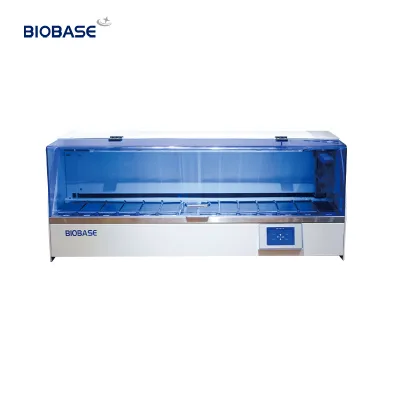

Biobase Automatic Laboratory Equipment Histology School Tissue Slide Stainer
$2000.00 - $3300.00
Moq: 1
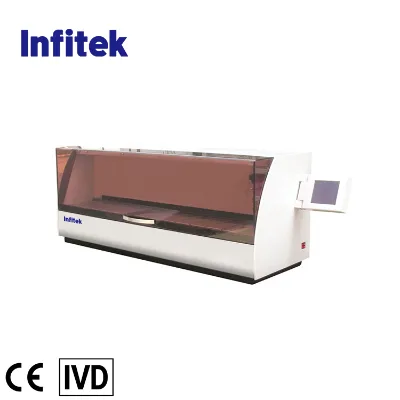


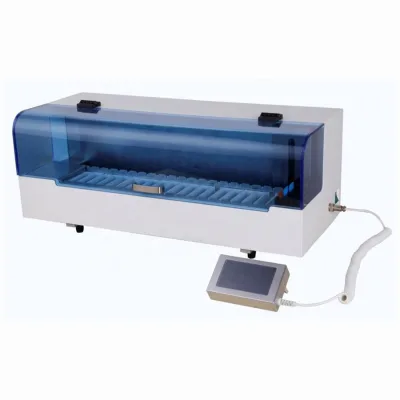
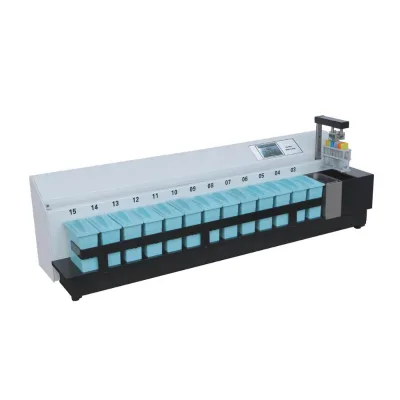


Clinical Laboratory Analysis Instrument Automatic Tissue Slide Stainer SLS-RS1
$4150.00 - $4400.00
Moq: 1


Comprehensive Sourcing Guide
Histology Tissue Slide Stainer Sourcing Guide
Procurement professionals must first distinguish between automated tissue processors and dedicated slide stainers, as the market often blends these functions under similar product names. The observed listings indicate a range of models, such as the KH-S100 and AM-LSP600, which serve distinct roles in the histology workflow. Buyers should verify whether the unit is designed solely for staining or if it integrates tissue processing capabilities, as this distinction fundamentally alters the equipment's utility within a pathology laboratory.
The observed product attributes reveal a focus on biological diagnostics with specific applications in histology and pathology. Listings describe devices with varying container capacities, such as 14 reagent containers or 12/16 options, which directly impact throughput. Sourcing decisions must align with the specific volume of slides required, noting that some units support a loading capacity of 65 slides per cycle while others may differ significantly in their operational parameters.
Product Scope and Observed Listing Signals
Buyers should analyze the observed price range of 1400 to 8500 USD to understand the market segmentation for these automated devices. This wide variance suggests differences in feature sets, such as the inclusion of drying cylinders or specific washing protocols. A lower price point may correspond to basic staining functions, while higher costs likely reflect advanced automation, larger capacity, or integrated processing features that reduce manual handling time.
The observed minimum order quantity of 1 unit indicates a flexible procurement environment suitable for individual laboratory upgrades or small-scale acquisitions. However, the variation in packing standards, ranging from standard export wooden cartons to separate packaging, requires careful logistical planning. Buyers must confirm if the packaging is sufficient to protect sensitive electronic components during international transit, especially given the heavy weights observed, such as 110kg for packaged units.
Technical Specifications to Verify
Technical due diligence must begin with the physical dimensions and power requirements, as these dictate installation feasibility. Observed specifications list machine dimensions around 1161x480x550mm and power ratings ranging from 300W to 1000VA. Procurement teams must verify that the laboratory's electrical infrastructure supports the required voltage, such as AC220V 50Hz or AC110V 60Hz, to prevent operational failures or safety hazards upon installation.
The operational parameters regarding time and temperature settings are critical for ensuring consistent staining results. Listings indicate processing times adjustable from 0 to 99 minutes and drying temperatures settable between 0 and 85 degrees Celsius. Buyers should verify the precision of these controls and the dwell time capabilities, which can range from 0 to 300 seconds, to ensure the equipment meets the specific protocol requirements of their histology workflows.
Compliance and Safety Documentation
Regulatory compliance is a primary concern when sourcing medical diagnostic equipment, and the observed certifications provide a baseline for verification. Listings frequently mention ISO9001, ISO13485, and CE marks, which are essential for market access in many regions. Buyers must request valid, current certificates for each specific model to confirm that the manufacturer maintains these quality management systems and that the device meets the necessary safety standards for medical use.
Safety documentation should also include Material Safety Data Sheets (MSDS) and specific compliance with chemical handling standards. Some observed listings reference ISOMSDS and CE certifications, which are vital for ensuring that the reagent containers and drying systems operate safely. Procurement teams must verify that the supplier provides comprehensive safety manuals detailing the handling of hazardous chemicals and the proper disposal of waste generated during the tissue staining process.
Cost Drivers and Commercial Terms
The total cost of ownership extends beyond the unit price to include shipping, installation, and potential maintenance contracts. The observed delivery date of within 5 working days suggests a relatively quick turnaround, but this may vary based on the specific model and origin, such as Zhejiang, China. Buyers should clarify if the quoted price includes freight, insurance, and customs duties to avoid unexpected expenses that could significantly alter the budget.
Commercial terms regarding customization and spare parts availability are equally important for long-term operational stability. The observed availability of customization options allows laboratories to tailor the equipment to specific workflow needs, but this may impact the lead time and final cost. Procurement agreements should explicitly define the scope of customization, the warranty period, and the availability of replacement parts like reagent containers or drying cylinders to ensure minimal downtime.
Supplier Qualification and Quality Control
Supplier qualification requires a rigorous assessment of the manufacturer's production capabilities and quality control processes. The observed product origin in China and specific model numbers like KH-S60 or AM-LSS800 indicate a specialized manufacturing base. Buyers should verify the supplier's track record in producing biological diagnostics equipment and request evidence of their internal quality control measures to ensure consistency across production batches.
Quality control checks must extend to the final product inspection before shipment. The observed packing standards, such as standard export wooden cases, are designed to protect the equipment, but buyers should verify the integrity of the packaging process. It is essential to confirm that the supplier conducts functional tests on the machine dimensions, weight, and operational parameters before dispatch to ensure the delivered unit matches the specifications provided in the listing.
Long-Term Procurement Checks
Sustainable procurement requires establishing a clear plan for ongoing maintenance and technical support. The complex nature of automated tissue stainers, with their multiple cylinders and precise temperature controls, necessitates regular servicing. Buyers should negotiate service level agreements that cover routine maintenance, calibration, and emergency repairs to maintain the reliability of the equipment over its intended lifespan.
Future-proofing the procurement strategy involves monitoring the availability of consumables and software updates. The observed reagent container capacities and processing times suggest that the equipment relies on specific consumables and potentially proprietary software. Procurement teams should verify the long-term availability of these consumables and ensure that the supplier provides firmware updates to maintain compatibility with evolving laboratory standards and protocols.
FAQs
What models are available for automated tissue slide stainers?
The product line includes several automated models such as KH-S100, KH-S60, KH-S101, AM-LSP600, AM-LSS800, AM-LSD700, and LSD-600. These devices are designed for pathology labs and histology applications. Each model offers specific dimensions and capacities to suit different laboratory workflows and tissue processing requirements.
What certifications do these tissue stainers hold?
These devices hold ISO9001, ISO13485, and CE certifications. Some models also carry ISOMSDS certification. These credentials ensure compliance with international quality and safety standards for biological diagnostics. Buyers can rely on these documented certifications for regulatory compliance in their respective markets.
Can the staining process time be customized?
Yes, the processing time for each container can be set arbitrarily between 0 and 99 minutes 59 seconds. This flexibility allows users to adjust protocols for different tissue types. Customization is available to meet specific laboratory requirements and ensure optimal staining results for various diagnostic needs.
What is the loading capacity for tissue slides?
The machine has a loading capacity of 65 pieces of slides. This capacity is designed to handle moderate to high-volume histology workflows efficiently. The device features multiple reagent containers, including washing and drying cylinders, to streamline the staining process without compromising throughput or quality.
What are the power requirements for operation?
The device operates on AC220V 50Hz or AC110V 60Hz working voltages. The power consumption is lower than 300W for some models, while others may require up to 1000VA. These electrical specifications ensure compatibility with standard laboratory power supplies in various regions, facilitating easy installation and operation.
How are the machines packaged for export?
The machines are packaged in standard export wooden cartons or wooden cases. Some models are separately packaged in cartons to ensure safe transit. This robust packaging protects the equipment from damage during shipping. The package dimensions and weights vary by model, ensuring secure delivery to global destinations.